

Riding camels in the desert, wandering photogenic streets, browsing for beautiful crafts — Morocco has become a favourite destination. If you are planning a trip, you probably want to know what it will cost. This article looks at one part of the budget in detail: food.
Prices are given in Moroccan dirhams (DH). On 23 February 2024, 1 DH was worth 14.98 Japanese yen.
What to expect
What you spend on food depends mostly on where you eat. Tourist restaurants offer clean, comfortable dining; local eateries are much cheaper and give you a real taste of everyday Moroccan life.
As Morocco is a Muslim country, alcohol is only available in certain places and is fairly expensive. Restaurants in upscale tourist hotels usually serve it, as do bars in the larger cities.
Tourist restaurants
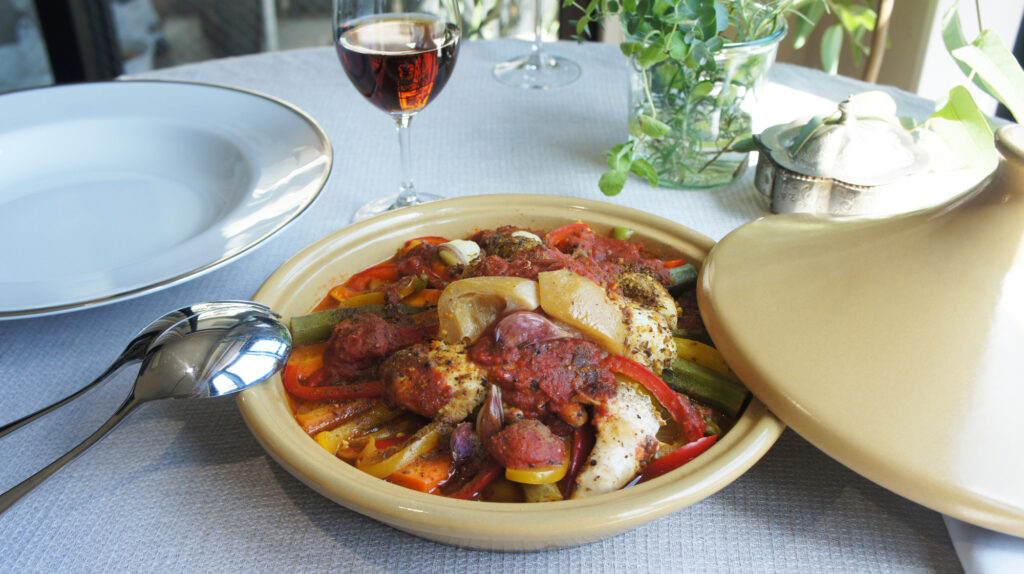
If you want a stylish setting or are concerned about hygiene, tourist restaurants are the safe choice. They cost more per meal than local places, but you can eat in comfort. Depending on the restaurant, allow at least about 80 DH per meal.
| Dish | Price |
|---|---|
| Tajine | about 45 DH |
| Couscous | about 45 DH |
| Harira soup | about 50 DH |
| Pastilla | about 85 DH |
| Moroccan salad | about 10 DH |
Japanese restaurants, mostly sushi bars, are slowly appearing in Morocco too, at prices similar to Japan — handy if you miss Japanese food.
Local eateries
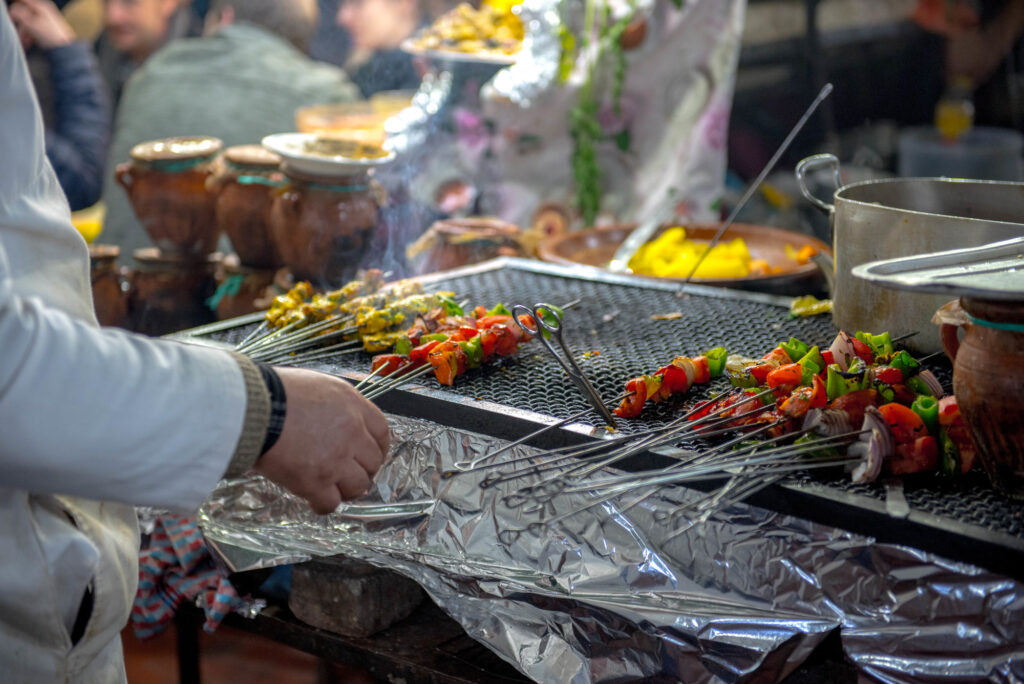
If you want to keep costs down or experience daily life, eat where locals eat. A meal costs from about 15 DH (around 225 yen) and rarely more than 50 DH (around 750 yen). You can sit down or buy snacks from street stalls and eat as you walk. Quality varies, so check reviews in advance or choose a busy place.
| Dish | Price |
|---|---|
| Tajine with bread (one portion) | about 17 DH |
| Fried sardine sandwich | 5 DH |
| Briouat (shrimp and vermicelli pastry) | 3 DH |
Cafés
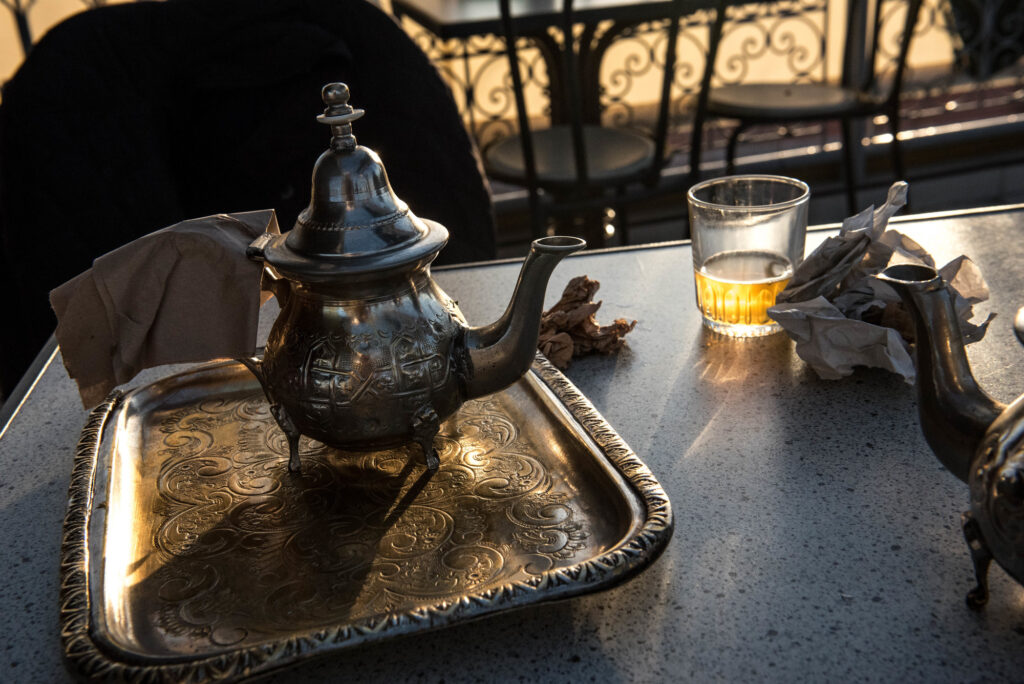
Café culture is deeply rooted in Morocco. Street cafés are always full of people relaxing over mint tea or chatting with friends, and those with a screen on the terrace for football matches are especially popular.
Traditional cafés are mainly social spaces for men, and some are men-only, so women may feel less at ease there. In recent years, however, cities such as Casablanca and Marrakech have seen more stylish cafés where women feel welcome, including organic and vegan ones. Do stop at a café during your explorations.
| Drink | Price |
|---|---|
| Mint tea | 7–10 DH |
| Nous-nous (half coffee, half milk) | 12 DH |
Supermarkets
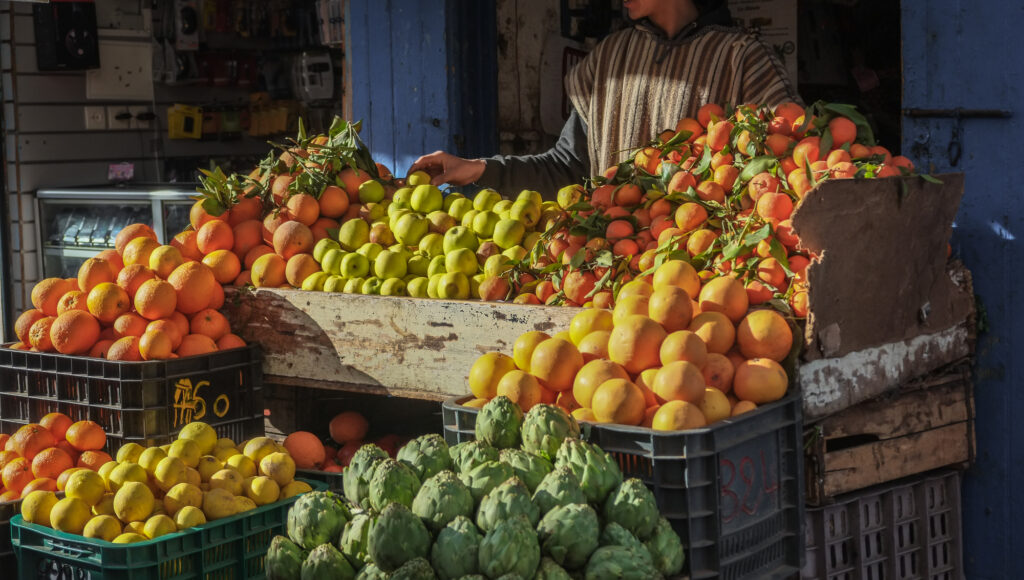
On a longer stay you may want to buy some food at the supermarket. Fresh produce such as fruit, vegetables and meat is much cheaper than in Japan. Imported goods are expensive — imported crisps cost more than at home — but Moroccan-made sweets are reasonably priced and make good small gifts. International supermarket chains also sell alcohol.
| Item | Price |
|---|---|
| Onions, potatoes, tomatoes | about 5 DH per kg |
| Khobz (bread) | 3 DH |
| Milk | 10 DH |
| Crisps (one bag) | 10 DH |
Tipping
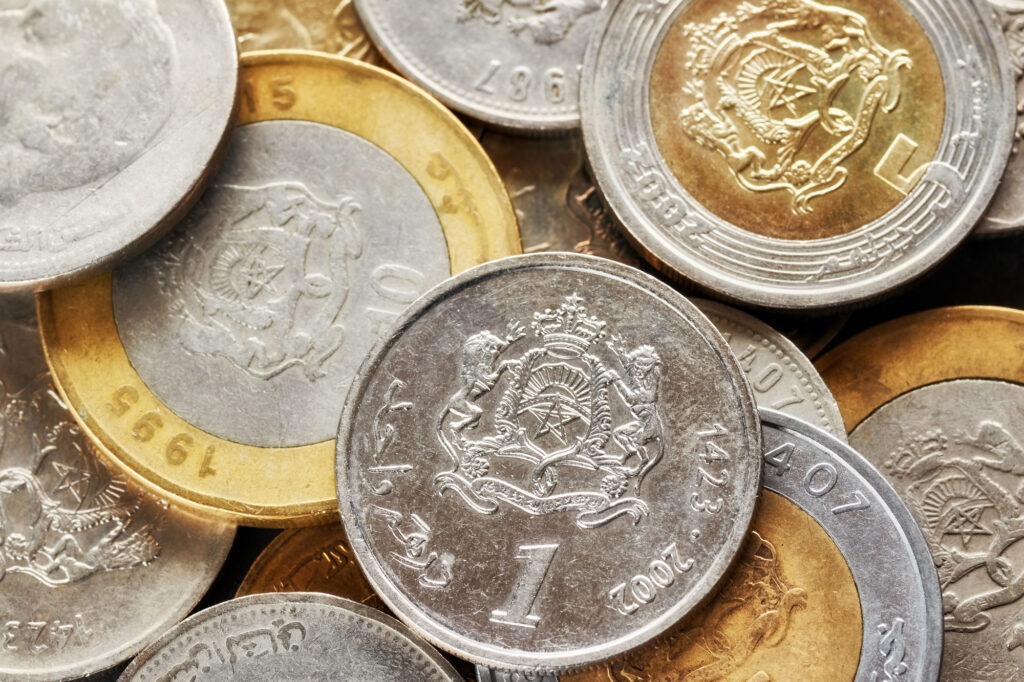
Tipping is customary in Morocco. In restaurants, the usual tip is 2–3 DH if the meal costs 50 DH or less per person, and 10–20% of the bill above that. Pay the bill at the till and give the tip directly to your waiter or leave it on the table.
Enjoy Morocco with Morocco Travel Destinations
Prices in Morocco are generally lower than in Japan, but tourist restaurants often cost about the same. Local eateries and street stalls let you enjoy Moroccan food for much less, so give them a try once you feel at home.
Morocco Travel Destinations designs original private tours with far more flexibility than large tour companies. Whether you want a fine restaurant or a busy local eatery, just tell us which cafés and restaurants interest you and we will take you there. Contact us.